
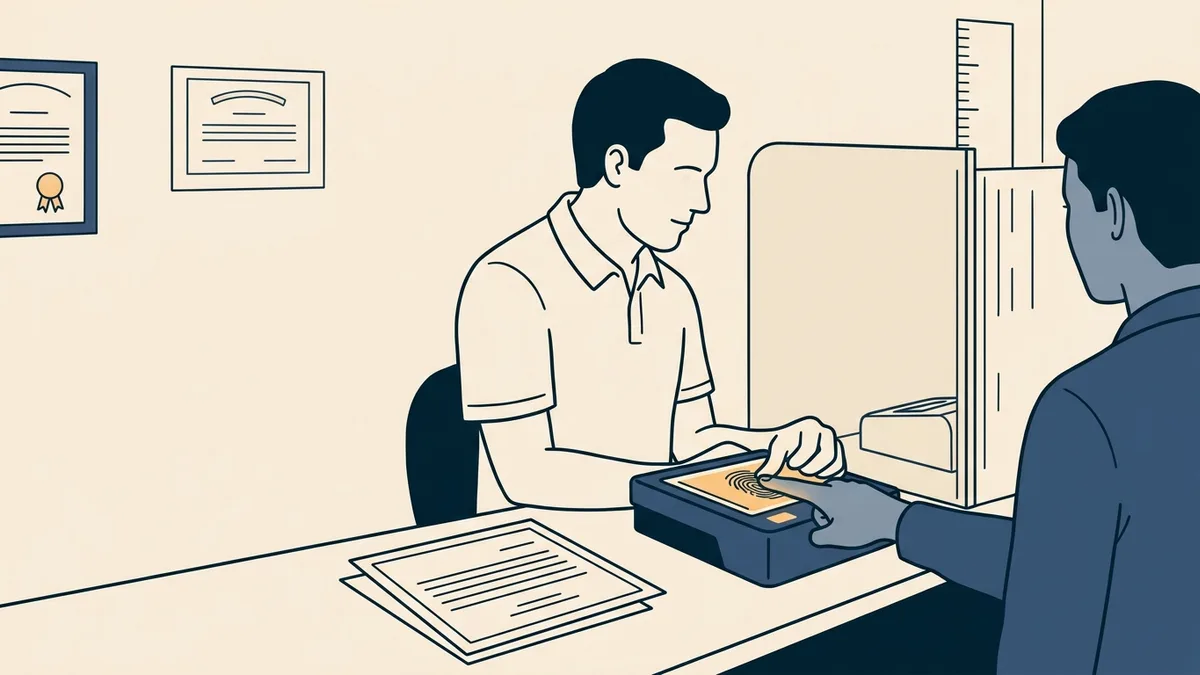
Many optometry boards require fingerprints for a state and FBI check, each through its own method. California uses Live Scan in state and mailed hard cards out of state, Florida requires electronic prints, and Utah has fingerprinted all applicants since April 1, 2026. Checks can add three to six weeks, and Kentucky treats one as valid for only 60 days.
Background checks have spread across optometry licensing in the last few years. Florida added electronic fingerprinting after its 2024 legislative session; Utah began requiring fingerprints of all optometry applicants on April 1, 2026. Boards such as California and Ohio run both a state and an FBI search, which means fingerprints, and each board has its own way of collecting them. For an optometrist applying in two or three states at once, that can mean two or three separate fingerprinting appointments, each tied to one board.
How do the states that publish their process collect fingerprints?
Electronic, through a state vendor or system
- California: applicants in California take a Live Scan form to a Live Scan location, and the prints go to the California Department of Justice and the FBI. Out-of-state applicants email the board and receive fingerprint hard cards by mail instead.
- Florida: House Bill 975, passed after the 2024 session, requires electronic fingerprinting, and the board says an application "cannot be approved until this requirement, along with all other licensure criteria, has been met." Florida also charges a $43.25 fee at renewal for the state to retain your prints for the licensure cycle.
- Missouri: electronic fingerprinting through the state vendor costs $41.75; paper cards take about five weeks.
- Ohio: prints go through a BCI and FBI WebCheck vendor, with ORC 4725.121 cited as the reason for the check.
Cards mailed by the board
- Arkansas: fingerprint cards arrive after the endorsement fee is paid.
- Mississippi: fingerprints are taken after the board approves the application, with a $32 fee.
States that list a fingerprint requirement and fee
- Minnesota: the $282 application fee includes a $32 background check, and the board warns the check can add three to four weeks.
- Nebraska: a $75 fingerprint fee to the State Patrol.
- West Virginia: a $47.25 background check plus $39.95 for out-of-state applicants.
- Wyoming: fingerprints are part of endorsement and CELMO endorsement; the check adds three to six weeks, and board review then takes one to three weeks.
- Delaware, Kentucky, Maryland, South Dakota, Texas and Utah also require fingerprints or a criminal history records check of applicants.
Why start the background check early?
More than people expect, and it usually runs in parallel with everything else only if you start it early. Minnesota estimates three to four weeks; Wyoming three to six. Missouri's paper cards take about five weeks against a much faster electronic option. Two timing rules matter as much as the duration:
- Checks expire. Kentucky treats a background check as valid for 60 days, so prints taken too early may need to be redone if the file stalls.
- Some boards take prints late. Texas lets License without Examination applicants submit fingerprints after the board reviews the application, but before a license can be issued. Mississippi fingerprints only after approval.
The best plan is usually to start fingerprinting the week the application is filed, unless the board sends cards only after a later step.
Can one set of prints serve several boards?
Do not count on it. Each board collects prints through its own process for its own statute: Ohio's vendor submission cites the Ohio optometry law, California routes Live Scan results to its Department of Justice, and Florida retains prints for its own licensure cycle. Plan on a separate fingerprinting step for each state unless that board tells you it can accept an existing result.
What do the criminal history questions ask?
Fingerprints confirm what your answers say, so the answers have to be complete. Texas asks whether, for any criminal offense including those pending appeal, you have ever been convicted of a misdemeanor other than a Class C, convicted of a felony, received deferred adjudication not finally dismissed, have pending charges, or faced military judicial action. A "yes" needs an explanation, a certified copy of the court records, a statement from any probation or parole officer, and a copy of any non-disclosure or expungement order.
Illinois asks about any conviction or plea of guilty or nolo contendere in any state or federal court, and wants DWI charges included even though minor traffic charges are not. It also says that "In general, a criminal conviction by itself does not usually result in denial of licensure." Florida lets applicants upload a personal statement and supporting documents with the online application for any "yes" answer in the criminal, personal or disciplinary sections.
A sealed or expunged record is exactly where answers go wrong. Texas asks for a copy of the non-disclosure or expungement order itself, so read each question's exact wording before deciding that something no longer needs to be listed. If you are unsure how to answer, Texas's own attestation notes that you may contact an attorney.
How do we coordinate fingerprints?
For each license we prepare ($699 per state on NBEO scores or by endorsement), we tell you exactly which method that board uses, request any cards the board mails, time the appointment so the check does not expire before the license issues, and confirm the board received the result. You attend the fingerprinting appointment and pay the vendor or agency directly. If your history includes something you need to disclose, we prepare the document list for your explanation, which you write and sign. See pricing, disclosing discipline on an application, or application mistakes that cost weeks.
Common questions
- How do out-of-state applicants get fingerprinted for California?
- California sends fingerprint hard cards by mail to applicants outside the state. Applicants in California use a Live Scan location instead.
- How long does an optometry background check take?
- Boards that publish an estimate give several weeks: Minnesota three to four, Wyoming three to six, plus Wyoming's one to three weeks of review afterward.
- Do I have to disclose an expunged conviction on an optometry application?
- Read each question exactly. Texas asks applicants to provide a copy of any non-disclosure or expungement order, and its attestation notes you may consult an attorney about how to answer.
- Can I reuse fingerprints from another state board?
- Plan on a separate check for each state. Each board collects prints through its own process and statute, such as Ohio's vendor submission or California's Live Scan.
Need Help with Your Application?
We prepare the optometry licensing process end-to-end — eligibility screening, documents, board follow-ups, and tracking.